

Shop Whimsical Tabletop Dish Stands: 2026 Buying Guide
Table of Contents
- Why Whimsical Tabletop Dish Stands Belong in Your Home
- Decorative Plate Display Ideas for Every Room
- Choosing the Right Size and Material for Your Dishware
- How to Clean Antique Gold Finish Metal Decor
- Weight Capacity, Stability, and Safe Display
- Styling Whimsical Dish Stands for Collectibles and Serveware
- Frequently Asked Questions
Last Updated: September 10, 2026
Why Whimsical Tabletop Dish Stands Belong in Your Home
A whimsical tabletop dish stand is a decorative metal sculpture with an integrated bowl or tray, designed to hold small items while doubling as character-driven art. The category has moved from novelty gift shops into serious interior styling, and the reason is simple: functional decor earns its footprint in a way that pure ornament never does.
This guide from Eric & Eloise Collection walks through sizing, materials, cleaning, and safe display so you can shop whimsical tabletop dish stands with confidence rather than guesswork. The collection's own pieces, designed by artist Jessica Hiemstra and cast in recycled aluminum with antique brass-gold finishes, show how the category works at its best.

Most buyers get one thing wrong: they treat these stands as seasonal props. In practice, the pieces that stay on a counter for years are the ones chosen for scale and finish first, theme second.
Decorative Plate Display Ideas for Every Room
A decorative plate stand does its best work when it sits where you already pause: an entry console, a kitchen counter, a dining sideboard. Start with the room's traffic pattern, then choose the piece height to match.

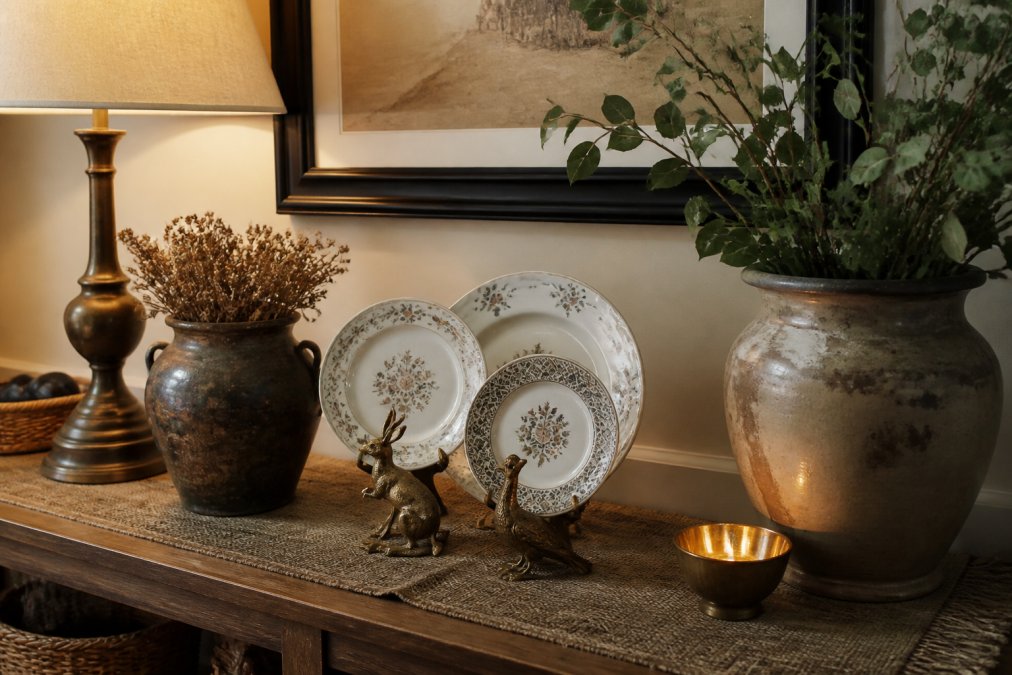
Mantel and Console Vignettes
Group in odd numbers and vary height. A tall stag at roughly 16 inches anchors the arrangement, a fox at 12 inches sits beside it, and a lower bowl or tray fills the front. Lean a small decorative plate against the wall behind the group to add a vertical plane.
Keep the palette tight. Two metallic tones plus one natural material, such as dried stems or a wooden tray, is enough.
Kitchen Counter and Dining Table Styling
On a countertop, the stand becomes a catchall organizer. Keys, loose change, and mail land in the integrated bowl instead of spreading across the surface. Near the dining table, the same piece works as a snack station: wrapped chocolates, nuts in a liner, or a small stack of napkins.
For a tiered serving plate effect, pair two or three stands of different heights on one surface and let the eye step down between them.
Choosing the Right Size and Material for Your Dishware
Match the stand's bowl width to what you plan to place inside it, and match the stand's height to the surface it sits on. A piece under 12 inches disappears on a tall mantel; a 16-inch piece overwhelms a narrow windowsill.
Measure twice before ordering:
- Counter or entry surface depth: leave at least 4 inches of clearance behind the stand
- Ceiling or shelf height above the display: allow 6 inches of headroom
- Bowl opening: wide enough for your largest intended item, whether that's a mini platter or a cluster of ornaments
- Base footprint: at least one-third the stand's total height for stable footing
Resin, Wood, Metal, and Acrylic Compared
Each material solves a different problem, and the trade-offs run deeper than weight alone. The table below reflects what most buyers discover only after the piece is on the counter.
Material |
Typical Weight |
Durability |
Care Burden |
Best For |
|---|---|---|---|---|
Resin |
1-3 lb |
Low; chips, fades, yellows with UV exposure |
Wipe only; no solvents |
Low-traffic shelves, seasonal accents |
Wood |
2-5 lb |
Moderate; swells and cracks with moisture swings |
Re-oil annually; keep dry |
Warm, natural interiors |
Acrylic |
1-2 lb |
Moderate; scratches and crazes over time |
Dry cloth only; ammonia clouds it |
Minimalist, near-invisible support |
Cast aluminum |
4-8 lb |
High; holds detail and finish for years |
Dry cloth; no polish needed |
Everyday use, collectibles, heavier dishware |
Weight Capacity and Stability, by Material
This is the spec most listings omit, and it is the one that determines whether your stand survives a year on the counter. A stand's usable load depends on three things: the material's yield strength, the thickness of the bowl wall, and the width of the base relative to the stand's height.
A practical rule most practitioners follow: keep the load under roughly 10 percent of the stand's own weight for tall, narrow designs, and up to about 25 percent for low, wide-bowl designs. That means a 6-pound cast aluminum stand with a broad base can comfortably hold 1 to 1.5 pounds, a stoneware plate, a dense figurine, or a small stack of napkins. A 2-pound resin stand should carry only a few ounces.
Signs a stand is overloaded:
- The base lifts when you press the top sideways
- The bowl rim flexes when you set an item down
- The piece rocks on a flat surface without being touched
- The finish shows hairline stress marks near the bowl-to-stem joint
Sustainability and Material Sourcing
Eco-conscious buyers have almost no guidance here, so it is worth asking three questions before purchase:
- Is the metal recycled? Recycled aluminum uses roughly 95 percent less energy to produce than primary aluminum, according to the U.S. Environmental Protection Agency's waste-reduction guidance (the EPA). Cast pieces made from recycled stock carry the same durability as virgin metal.
- Are finishes low-VOC? Powder-coat and baked-enamel finishes cure without the solvent off-gassing of some spray lacquers. If a listing does not say, ask.
- Is the wood FSC-certified? The Forest Stewardship Council certification is the most common third-party marker for responsibly harvested wood in the U.S. market (fsc.org).
Resin is the hardest material to source responsibly, most decorative resin is petroleum-derived and not widely recyclable at curbside. Acrylic can be recycled but rarely is in consumer settings. Cast metal and solid wood are the two categories where a piece can realistically be refinished, repaired, or passed on rather than discarded.
How to Clean Antique Gold Finish Metal Decor
Cleaning antique gold finish metal decor takes about two minutes and one soft, dry cloth. Skip the polish, skip the abrasives, and skip the sink.
Antique gold and brass-gold finishes are deliberately muted, often with a darker patina worked into the recesses to create depth. Abrasive cleaners strip that patina and leave bright, uneven patches that cannot be restored at home.
A workable routine:
- Dust weekly with a dry microfiber cloth, working into antlers, pipes, and sculpted details
- Wipe fingerprints with a barely damp cloth, then dry immediately
- Avoid commercial metal polish, ammonia, and abrasive sponges entirely
- Keep the piece indoors and away from windows where condensation forms
- Use a liner for fresh flowers or unwrapped food to prevent moisture contact
Humidity is the real enemy. A covered porch or a bathroom shelf will dull the finish far faster than normal indoor air. Store seasonal pieces wrapped in acid-free tissue rather than newspaper, which can transfer ink.
Cleaning the Other Three Materials
Most guides stop at metal. The care routine for wood, resin, and acrylic is different enough that using the wrong method will damage the piece.
Wood. Dust with a dry cloth. For a deeper clean, use a cloth wrung nearly dry from a mild dish-soap solution, then dry immediately, standing water raises the grain and can crack the finish. Re-oil food-safe or tung oil once a year, or whenever the surface looks dry. Never put wood in a dishwasher, and never soak it.
Resin. Dust with a soft cloth or a vacuum brush attachment. Sticky residue comes off with a barely damp cloth and a drop of mild soap. Avoid alcohol, acetone, and ammonia-based cleaners, they cloud the surface and can lift paint from painted resin. Keep resin out of direct sun; UV exposure is the leading cause of yellowing (peer-reviewed research).
Acrylic. Use a dry microfiber cloth for dust and a plastic-safe cleaner for smudges. Never use paper towels, which micro-abrade the surface, and never use ammonia-based glass cleaner, which causes fine crazing over time. Small scratches can sometimes be buffed out with a plastic polish, but deep scratches are permanent.
A Quick Reference by Material
Material |
Weekly |
Deep Clean |
Never Use |
|---|---|---|---|
Antique gold metal |
Dry microfiber |
Barely damp cloth, dry immediately |
Metal polish, ammonia, abrasives |
Wood |
Dry cloth |
Mild soap, dry at once; oil yearly |
Soaking, dishwasher, harsh solvents |
Resin |
Soft cloth or vacuum brush |
Damp cloth, drop of mild soap |
Alcohol, acetone, ammonia, direct sun |
Acrylic |
Dry microfiber |
Plastic-safe cleaner |
Paper towels, ammonia glass cleaner |
Weight Capacity, Stability, and Safe Display
Stability comes down to base footprint and center of gravity, and most buyers never check either. A tall, narrow stand with a small base tips easily when something heavy lands in the bowl.
Run this check before you commit to a spot:
- Press the top of the stand gently sideways. If the base lifts, move it to a lower surface
- Keep the heaviest items centered in the bowl, never resting on the rim
- Place tall stands against a wall or between two heavier objects
- Use museum putty under the base on glass or polished stone
- Keep stands out of reach of pets and small children, especially on open shelving
Weight capacity varies by design, so treat the bowl as a display surface rather than a storage bin. A handful of wrapped candies, a few ornaments, or a small stack of napkins is the right load. A full bowl of river stones is not.
Styling Whimsical Dish Stands for Collectibles and Serveware
Collectibles and functional serveware want different treatment, and mixing them in one bowl usually looks cluttered. Give each its own stand.
For collectibles, choose a piece whose character echoes the collection. Nature-inspired decor pairs naturally with animal figures, and a single stand holding three or four small objects reads as a curated home moment rather than a display case.
For serveware, keep it practical. Wrapped treats and nuts work well; unwrapped food should sit in a liner, since the bowls are not designed for direct food contact. A mini platter or a small serving tray placed on the table beside the stand extends the arrangement without crowding it.
Space-saving storage matters here too. Stands that stay out year-round should be easy to dust and hard to knock over. Seasonal pieces store flat in a labeled bin with padding between them, which protects the finish and makes rotation quick.
That's the throughline across everything above: whimsical tabletop dish stands work when they're chosen for scale, material, and placement first. Character is what makes you love the piece. Function is what keeps it on the counter.

The hard part isn't finding a charming dish stand. It's finding one that holds up to daily use, fits your surface, and still looks like art after a year. Eric & Eloise Collection designs around exactly that tension: nine original storybook characters by artist Jessica Hiemstra, cast in recycled aluminum with warm antique brass-gold finishes, each with an integrated bowl built for real use. Free shipping applies on orders over $250, so building a paired set is straightforward. Subscribe to our emails and get first look at new characters as they join the framily.
Frequently Asked Questions
How do you display decorative plates on a table?
Use a dish stand with an integrated bowl or tray to hold plates upright or flat. For upright display, lean plates against a wall or use an easel-style stand. For flat display, stack plates in a tiered serving plate or arrange them on a tray. Whimsical dish stands like Eloise the Fox or Eric the Hare work well as centerpieces because their character shapes add height and personality while keeping plates stable.
What are the best materials for tabletop dish stands?
Cast aluminum, like the recycled aluminum used in Eric & Eloise Collection pieces, offers durability and a weighty feel that resists tipping. Resin is lighter and cheaper but can crack over time. Wood brings warmth but needs protection from moisture. Acrylic is budget-friendly and clear but scratches easily. For antique gold or brass finishes, metal holds up best and develops character with age rather than wearing away.
How do you clean antique gold finish metal decor?
Wipe with a soft, dry cloth to remove dust. For deeper cleaning, use a slightly damp cloth with mild soap, then dry immediately. Avoid abrasive cleaners, harsh chemicals, and soaking. Dust around detailed areas like antlers or pipe stems with a soft brush. Keep pieces indoors and away from excess moisture to preserve the antique gold finish. A liner works well for unwrapped food or fresh flowers.
Are whimsical dish stands suitable for everyday use?
Yes, many are designed for daily function. Cast aluminum stands like Frankie the Stag or Saint Nick hold wrapped candies, keys, loose change, or ornaments. The integrated bowl or tray keeps items contained. For unwrapped food, use a liner to protect the finish. Their sturdy construction means they can be restyled season after season without losing shape or charm.