

Whimsical Lighting for Reading Nooks: A Cozy How-To Guide
Last Updated: November 20, 2026
Quick Summary
Whimsical lighting for reading nooks means layering three light sources: a task light for the page, ambient light for a soft glow, and accent light for character. Choose warm 2700K to 3000K bulbs, add dimming, and pick a theme like celestial, botanical, storybook, or vintage. Match the fixture to your nook's shape so the corner actually gets used.
- A floor lamp needs roughly a foot of clearance behind the chair.
- Install a wall sconce shade about 48 to 60 inches from the floor when seated.
- Hang a pendant 30 to 36 inches above the seat to light the page.
- Botanical lamps are usually accent pieces, so pair one with a real task light.
- Put accent fixtures on a separate switch or smart plug to run them alone for mood.
Table of Contents
- Reading Nook Lighting Ideas That Set the Mood
- Layered Lighting for Reading: Task, Ambient, and Accent
- Floor Lamps for Focused Reading Light
- The Reading Nook Wall Sconce: Space-Saving Charm
- Bookshelf Nook Light: Illuminating Built-Ins and Window Seats
- Table Lamps, Pendants, and Whimsical Accent Fixtures
- Build Your Whimsical Reading Nook Lighting Plan
- Frequently Asked Questions
Reading Nook Lighting Ideas That Set the Mood
Whimsical lighting for reading nooks starts with one decision: what story should this corner tell? A reading nook works like a small stage, and light is the spotlight. Get the lighting right and a chair by a bookshelf becomes an escape hatch from the rest of the house. Get it wrong and you have a bright corner nobody sits in.
Below, we break down fixture types, brightness, and layout so you can build a nook that actually gets used. The approach is simple: match the fixture to the space, then layer task, ambient, and accent light on top.
Match the Fixture to the Nook Shape
Narrow corner? A wall sconce saves floor space. Wide window seat? A pendant or a pair of table lamps works better. Deep built-ins? Add a bookshelf nook light so the shelves glow instead of going dark.
Measure the nook's width and note where an outlet sits before you shop. A floor lamp needs roughly a foot of clearance behind the chair, while a sconce needs wall space at eye level when you're seated. The fixture should serve the room's shape, not fight it.
Brightness and Color Temperature Basics
Reading light should be bright enough to see print clearly without glare. Look for bulbs in the 2700K to 3000K range, which cast the warm, amber glow most people associate with a cozy atmosphere. Cooler bulbs above 4000K read as clinical and kill the mood.
For the reading task itself, aim for a focused pool of light on the page rather than flooding the whole corner. A dimmable fixture gives you room to dial brightness up for a long chapter and down for relaxing.
Layered Lighting for Reading: Task, Ambient, and Accent
Layered lighting for reading means three jobs, three fixtures. Task lighting puts focused light on the page. Ambient lighting fills the room with a soft glow. Accent lighting adds character and depth, often through a decorative piece or a warm bulb tucked into the shelves.
Skip a layer and the nook feels flat. A single overhead fixture creates shadows and glare. A lone floor lamp leaves the corners dark. When the three layers work together, the eye moves comfortably from book to room and back. That's the difference between a corner with a lamp and a reading corner you never want to leave.
Floor Lamps for Focused Reading Light
A floor lamp is the workhorse of reading nook lighting ideas. It needs no installation, moves when you rearrange, and puts focused light exactly where you want it. Choose an adjustable lamp with a directional shade so the light lands on the page, not over your shoulder.
Place the lamp beside or slightly behind your chair, with the shade at about shoulder height when seated. Watch out: a bare bulb at eye level throws glare straight into your line of sight. A flexible lampshade or a downward-angled head fixes that in seconds.
The Reading Nook Wall Sconce: Space-Saving Charm
A reading nook wall sconce is the best answer for small spaces. It clears the floor entirely and puts light at the perfect height for a chair or window seat. Swing-arm styles let you pull the light close for reading and push it back when you're done.
Install the sconce so the shade sits just above eye level when seated, roughly 48 to 60 inches from the floor depending on your chair. Hardwired sconces look cleanest, but plug-in versions work well in rentals. A dimmer on the switch makes a sconce far more useful for mood lighting after dark.
Bookshelf Nook Light: Illuminating Built-Ins and Window Seats
Built-in bookshelves and window seats are the most requested nook features, and both go dark without dedicated light. A bookshelf nook light solves this: slim LED strip lights along shelf undersides, puck lights tucked into corners, or a small table lamp on a shelf that has an outlet nearby.
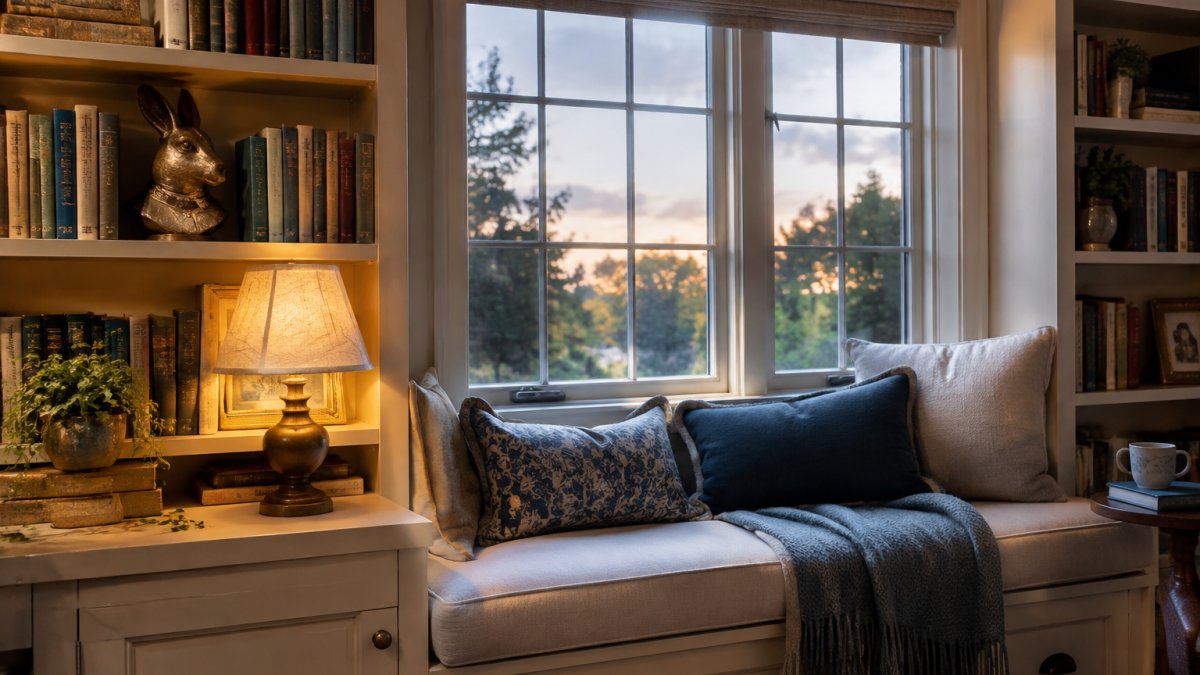
For a window seat, a low-wattage table lamp on the sill end or a pendant hung above the cushion adds charm without blocking the view. This is also where whimsical decor earns its place. A storybook-inspired piece among the books turns shelving into a display, and warm light makes it glow.
Table Lamps, Pendants, and Whimsical Accent Fixtures
Table lamps and pendants are where a reading nook stops being functional and starts telling a story. The fixture type matters less than the character it brings, so it helps to organize choices by aesthetic rather than by product category. Four themes cover most of what readers ask for.
Celestial. Think moon-phase shades, star-pierced metal, or a globe pendant that glows like a small planet. A celestial theme pairs well with a window seat, where the lamp can echo the view after dark. Keep the bulb warm (2700K) so the glow reads as moonlight rather than lab light, and put the fixture on a dimmer so it can drop to a low ember for late reading.
Botanical. Fern-print shades, mushroom-shaped lamps, and vine-wrapped fairy lights suit built-ins and shelf displays. A small mushroom lamp on a shelf ledge adds a low, soft pool of light that flatters books and plants alike. The trade-off is brightness: decorative botanical lamps are usually accent pieces, so pair one with a real task light rather than relying on it to illuminate the page.
Storybook. This is the theme most nooks are reaching for. A lamp with a sculpted base, a vintage brass shade, or a small animal figure holding the bulb turns the fixture into a character. Place it at the end of a shelf or on a side table so it reads as part of the scene, and keep the shade opaque enough that the bulb does not stare back at you.
Vintage. Milk-glass shades, banker's lamps, and aged-brass swing arms bring a library feel. A banker's lamp is a genuinely good task light because the green glass shade directs light down onto the page and cuts glare from the side. That makes vintage one of the few themes that is both decorative and practical.
Pendants and small chandeliers. Hang a pendant only when you have ceiling height and want the fixture to be the focal point. A common guideline is to set the bottom of the pendant about 30 to 36 inches above the seat so it lights the page without blocking sightlines. A small chandelier works in a taller nook but throws scattered light, so treat it as ambient and keep a task lamp in the plan.
Accent fixtures. Fairy lights woven through shelves, a tiny lamp on a tray, or a plug-in picture light over a print add sparkle without much brightness. Put accent fixtures on a separate switch or smart plug so you can run them alone for mood. That separation is what lets the same corner feel playful at dusk and calm at midnight.
Watch out: a purely decorative lamp can look charming in photos and still leave the page too dim to read. Check the lumens on the box before you buy, and plan a dedicated task light alongside any accent piece.
Here are the four whimsical themes the article covers, plus pendants and accent fixtures, and what each one is best at.
| Option | Best for | Key difference |
|---|---|---|
| Celestial | Window seats | Moon-phase shades, star-pierced metal, globe pendants |
| Botanical | Built-ins and shelf displays | Accent pieces, usually not bright enough for reading |
| Storybook | Most reading nooks | Sculpted base or animal figure turns fixture into a character |
| Vintage | Task light and library feel | Banker's lamp directs light down and cuts glare |
| Pendants and small chandeliers | Taller nooks and focal points | Hang 30 to 36 inches above the seat |
| Accent fixtures | Mood and sparkle | Put on a separate switch or smart plug |
Build Your Whimsical Reading Nook Lighting Plan
Start with the shape of your space, then build the three layers in order. Here is the plan we'd follow:
- Measure the nook and note outlet locations
- Pick the task light first: floor lamp, sconce, or table lamp
- Add ambient light with a torchiere, pendant, or second lamp
- Add accent light: shelf lights, fairy lights, or a decorative fixture
- Choose 2700K to 3000K bulbs and add dimming
- Position lights outside your line of sight to cut glare
- Style the shelves with one or two character pieces as a focal point
That last step is where the whimsy lives. A warm lamp, a comfortable chair, and a storybook character keeping watch from the shelf turn a corner into a place you want to sit. If you want more ideas for finishing the look, browse our storybook-inspired home decor ideas to pair your lighting with pieces that tell a story.
Your reading corner deserves more than a lamp dropped in the corner. We design and cast original storybook characters in bronzed aluminum, from animal wall mounts to dish stands and planters, so your shelves and walls carry the same charm as your lighting. Each piece is designed by artist Jessica Hiemstra and ships free on orders over $250. Get started with Eric & Eloise Collection and turn your reading nook into a small gallery of character-driven art.
Frequently Asked Questions
What kind of lighting is best for a reading nook?
The best setup pairs a focused task light with softer ambient light. A floor lamp or adjustable table lamp with a warm bulb (around 2700K) gives you enough brightness to read without glare, while a dimmable sconce or fairy lights add cozy atmosphere. Keep the task light at or slightly behind your shoulder so the page is lit evenly and shadows fall away from the text.
How do you light a reading nook without overhead lighting?
Skip the ceiling entirely and build layers instead. Use a floor lamp or wall sconce as your task light, add a small table lamp or bookshelf nook light for ambient glow, and finish with accent pieces like fairy lights or a whimsical sculptural fixture. Plug-in sconces and dimmable bulbs make this easy in rentals or rooms without wiring.
What color temperature is best for reading?
Warm light in the 2700K to 3000K range keeps a reading nook feeling cozy while staying bright enough for focus. Cooler bulbs above 4000K read as clinical and can feel harsh in a small corner. Choose dimmable bulbs so you can raise brightness for long reading sessions and lower it for relaxing.
How can you add whimsical lighting to a small reading nook?
Small spaces reward vertical and decorative choices. A plug-in reading nook wall sconce saves floor space, a slim floor lamp tucks into a corner, and fairy lights or a storybook-inspired accent piece add personality without clutter. Keep one clear task light for reading and let the whimsical fixtures handle the charm.
